
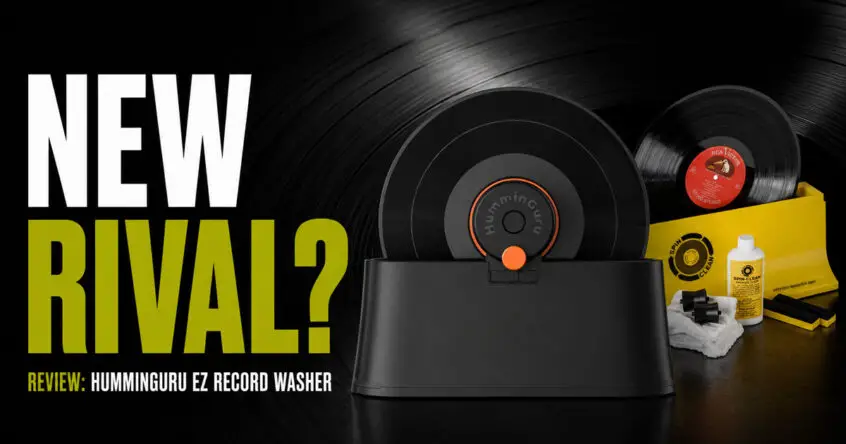
The Spin-Clean has been one of the most recognisable affordable record-cleaning systems for decades. I have owned mine for many years, and despite its limitations, it remains a simple and effective way to batch-clean a collection without spending hundreds—or even thousands—on a powered record-cleaning machine.
HumminGuru’s EZ Record Washer follows the same basic principle. It is a compact basin that cleans both sides of a record simultaneously as you rotate it through a water-and-cleaning-fluid mixture. However, HumminGuru has redesigned almost every part of the user experience, from the method used to hold and turn the record to the brushes, drying rack and storage.
One of my long-standing complaints about the Spin-Clean is that records can feel surprisingly stiff to rotate between its velvet cleaning pads. Older versions could also suffer from the adjustable rollers riding upwards as the record turned, although newer Spin-Clean models are said to have improved this area.
The EZ Record Washer promises to make the process smoother, allowing you to hold the basin with one hand and turn the record with the other. After testing it with both a lightly soiled LP and a considerably more abused Beatles EP, I think HumminGuru has produced a genuinely thoughtful alternative—and, in several respects, a more enjoyable product to use.
What Is the HumminGuru EZ Record Washer?
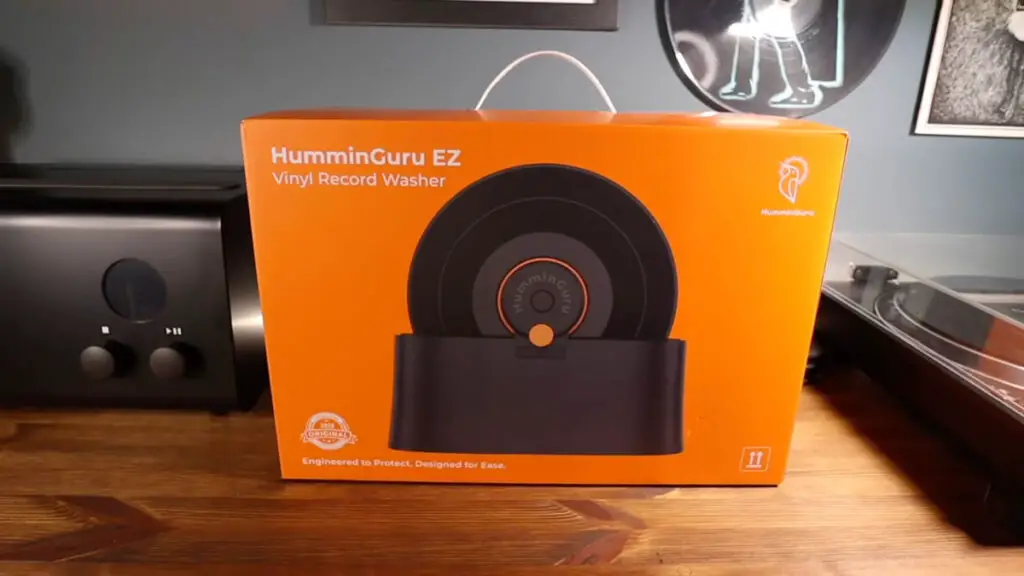
The EZ is a manually operated record-cleaning basin designed for 7-inch, 10-inch and 12-inch vinyl records. There is no motor, vacuum pump or ultrasonic system. Instead, the record passes between two removable goat-hair brushes while you rotate it through a mixture of distilled water and HumminGuru’s dedicated cleaning fluid.
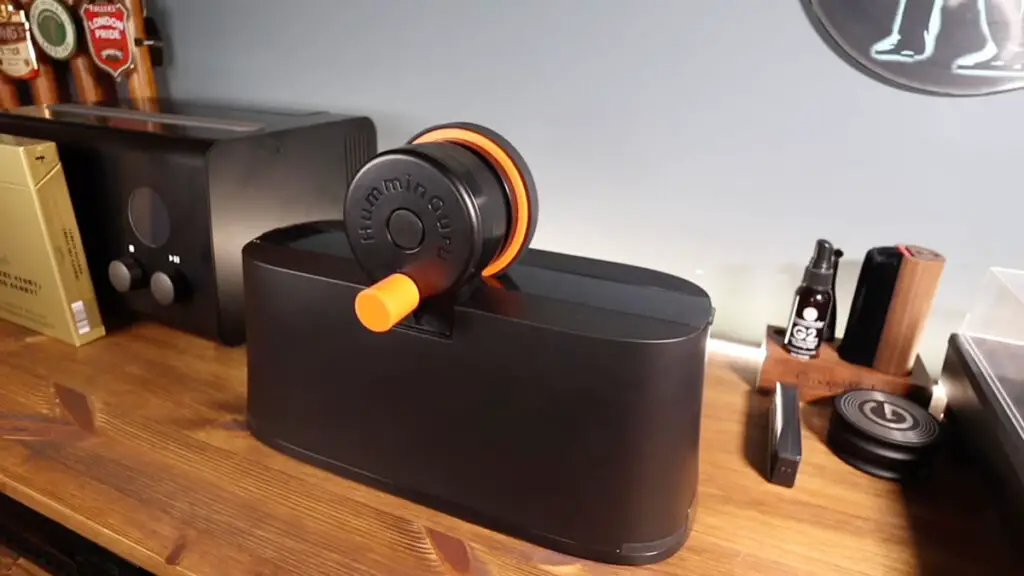
A protective clamp seals around the record label and doubles as the rotation handle. Unlike the Spin-Clean, there are no rollers to reposition when switching between different record sizes. You simply secure the record inside the clamp, place it into the basin and turn the handle.
HumminGuru says the clamp and brush mechanisms can accommodate records between 1mm and 3mm thick. The basin holds 950ml of water, and the supplied alcohol-free cleaning fluid is added at a ratio of two capfuls per tank. One fill is intended to clean approximately 10–20 records, depending, inevitably, on how dirty they are.
At the time of writing, the EZ Record Washer is listed at $88 through HumminGuru’s official store.
A More Thoughtful Compact Design
One thing I have come to appreciate about HumminGuru products is how much thought tends to go into the practical details, and the EZ Record Washer continues that trend.
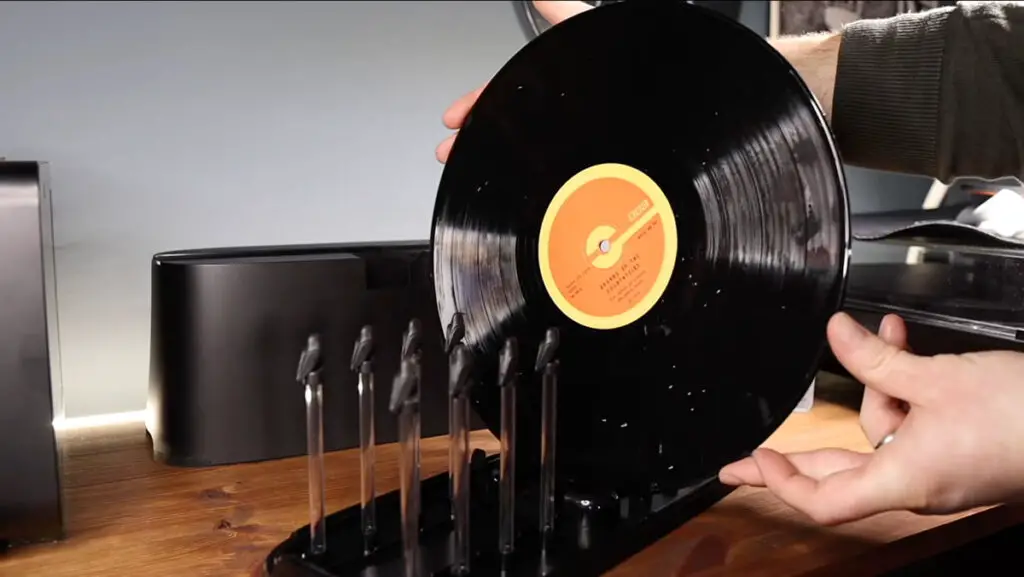
The best example is the integrated drying rack, which can hold up to eight records. When you first unbox the product, you need to attach the 16 small supports—or “HumminGuru birds”, as the company calls them—but once assembled, the rack does not need to be taken apart again. It simply fits beneath the main cleaning basin when stored.
That is a much neater solution than the toast rack I have traditionally used alongside my Spin-Clean.
The remaining parts also fit together well. The clamp handle can remain stored inside the basin when the lid is fitted, thanks to a carefully positioned notch that allows everything to nest together properly. It is a small detail, but one that will matter to collectors who do not have a dedicated utility room or large cleaning station.
Good compact design is important with record-cleaning equipment. A product can work exceptionally well, but if it is awkward to assemble, messy to empty or difficult to store, there is a good chance it will spend most of its life in a cupboard.
The EZ feels like something you could bring out, use for a batch of records and put away again without the process becoming a major event.
Goat-Hair Brushes Instead of Velvet Pads
Another notable difference between the EZ and Spin-Clean is the cleaning material itself.
The Spin-Clean uses two soft fabric-covered pads that grip both sides of the record. They can clean effectively, but the fit is quite tight, which contributes to the resistance you feel when rotating the disc.
HumminGuru has chosen removable goat-hair brushes instead. The fibres are soft and flexible, allowing the record to move between them with far less effort while the bristles sweep across the groove surface.

The company says the brushes are designed to lift dust and debris without scratching the record or generating static. They are also replaceable, so you are not expected to use the original pair indefinitely.
It is difficult to declare one brush system definitively better based solely on the cleaning results from a handful of records. Both methods can remove loose dirt, fingerprints and surface contamination effectively.
What I can say with confidence is that the HumminGuru system feels significantly easier to use.
How to Use the HumminGuru EZ Record Washer
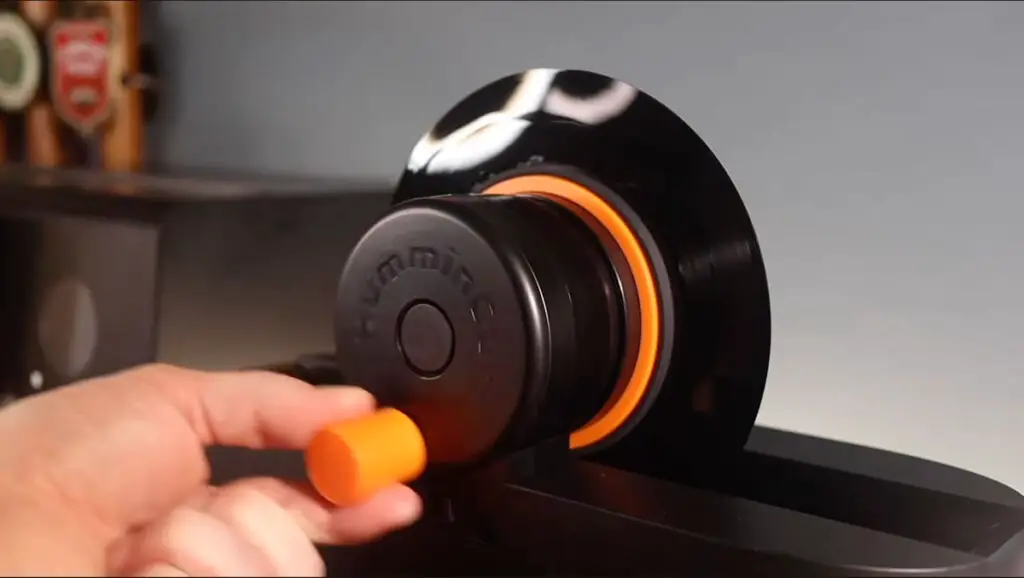
The first step is to release the two parts of the record clamp by pressing the button on the top. Place the record over the spindle on the lower section, position the upper clamp over it and press down until it clicks securely into place.
This creates a firm seal around the record label and provides the handle used to rotate the disc. Because the clamp holds the record from the centre, you do not need to adjust rollers for different sizes. Whether you are cleaning a 12-inch LP, a 10-inch record or a 7-inch single, the basic process remains the same.
Next, fill the basin with distilled water up to the clearly marked MAX line and add two capfuls of the supplied EZ Washer Fluid. HumminGuru describes the formula as alcohol-free and designed to break down fingerprints, grease, grime and skin oils. A 300ml bottle is said to provide enough fluid for approximately 300–600 records.
Once the clamp is inserted into the basin, slide the lock across to secure it. Hold the washer body with one hand and rotate the handle with the other.
HumminGuru recommends turning the handle 12 times clockwise, followed by 12 turns in the opposite direction. It is worth noting that four turns of the handle produce one complete rotation of the record, so this equates to three full revolutions in each direction—broadly similar to the standard Spin-Clean recommendation.

That distinction is useful because “12 turns each way” initially sounds excessive. In practice, the gearing of the handle means you are not rotating the record 24 complete times.
Once cleaning is complete, I recommend leaving the record above the basin for a few seconds to allow as much fluid as possible to drain away. A supplied microfibre cloth can then be used to catch any remaining drips before the clamp is released and the record is transferred to the drying rack.
Much Easier to Rotate Than a Spin-Clean
This is where the EZ immediately distinguishes itself.
The handle is extremely easy to turn. You can keep the basin stable with one hand while rotating the record smoothly with the other, without needing to grip the outside edge of the vinyl or fight against stiff cleaning pads.
The goat-hair brushes appear to play a large part in this. They flex as the record changes direction, maintaining contact while creating far less resistance than the Spin-Clean’s tightly fitted velvet pads.
The clamp system is equally important. It keeps your hands away from the wet record surface, protects the label and removes the possibility of adjustable rollers moving out of place.
None of this means the Spin-Clean is unusable. I have cleaned plenty of records successfully with mine, and the current design remains a proven and relatively affordable system.
The HumminGuru simply feels more refined.
Cleaning Test One: Sounds of the Countryside
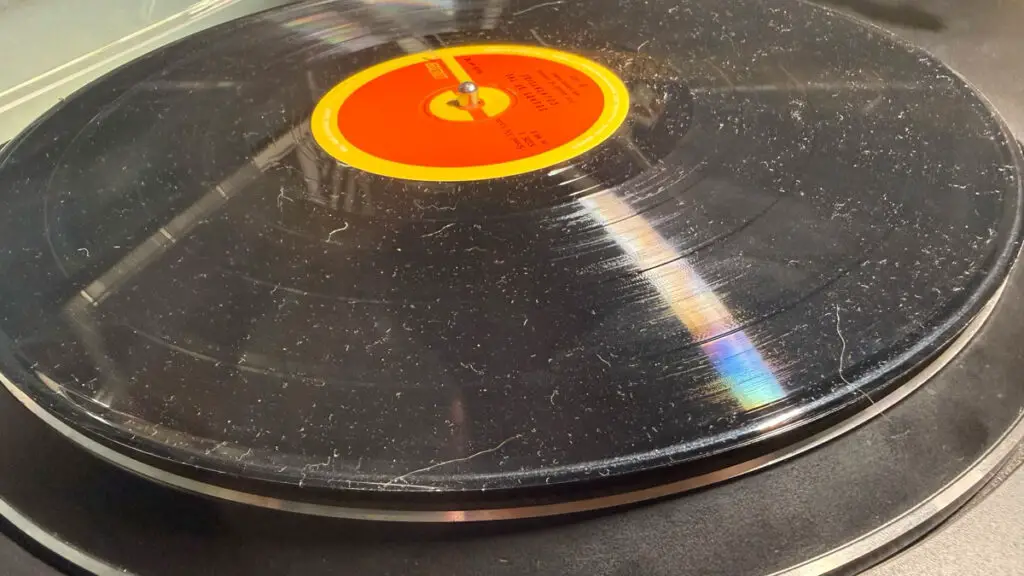
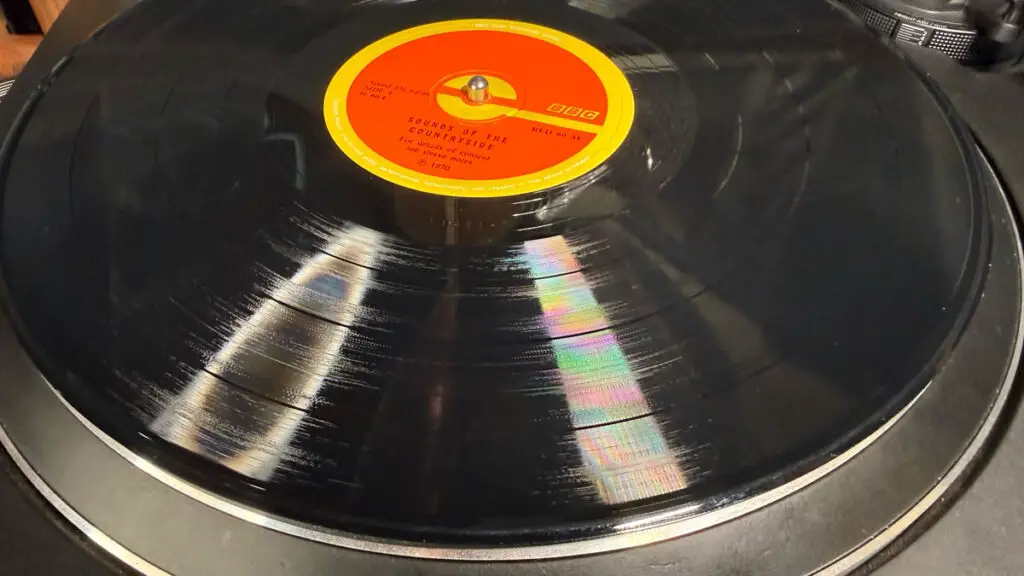
For the first test, I used a copy of Sounds of the Countryside. The record was not particularly filthy, but it had a light layer of dust and several visible fingerprints, making it a useful example of the kind of routine cleaning most collectors will perform.
After a session in the EZ Record Washer, the dust and fingerprints had been removed successfully. Visually, the record looked considerably cleaner, with none of the greasy marks left on the surface.
The difference in the before-and-after audio samples was fairly subtle, but that was not surprising (you can hear these for yourself in the video embedded into this review article). The record was not especially noisy to begin with, and no cleaning method can create a dramatic transformation where the main issue is only a light covering of dust.
What the test demonstrated was that the EZ could deal with everyday surface contamination quickly and without fuss.
Cleaning Test Two: A Heavily Used Beatles EP
The second test was rather more demanding.
I used a heavily played Beatles EP that had clearly endured its fair share of abuse. The run-in groove and spaces between tracks contained substantial noise, while the overall condition suggested a mixture of dirt, previous handling and permanent groove wear.
I was not expecting miracles. Record cleaning can remove contaminants, but it cannot reverse physical wear caused by a damaged or heavily used groove.
Even so, the result after using the EZ Record Washer was clear both visually and audibly. A significant amount of the loose noise and contamination had been reduced, giving the record a much cleaner presentation.
The remaining noise was almost certainly a combination of deeper debris and permanent wear, but the manual wash had already done the bulk of the useful work.
You can see both before and after visuals, and hear audio samples, again, in the video embedded above.
This is an important point whenever discussing record cleaning. A cleaner can restore a dirty record, but it cannot rebuild vinyl that has been physically worn away by a damaged stylus, excessive tracking force or decades of poor handling.
The improvement you hear will therefore depend heavily on what caused the noise in the first place.
Using the EZ as an Ultrasonic Pre-Cleaner
HumminGuru also positions the EZ Record Washer as a pre-cleaning system for records that will subsequently be placed in an ultrasonic machine.
That approach makes a lot of sense and is often how I deal with especially dirty second-hand records.
Different cleaning methods have different strengths. Ultrasonic cavitation is particularly effective at lifting fine contamination from within the record groove, but it may be less efficient at dealing with heavy fingerprints, oily deposits or stubborn surface grime.
A manual wash can remove that material before it enters the ultrasonic tank. This not only gives the second stage less work to do, but also helps prevent a very dirty record from contaminating the ultrasonic water unnecessarily.
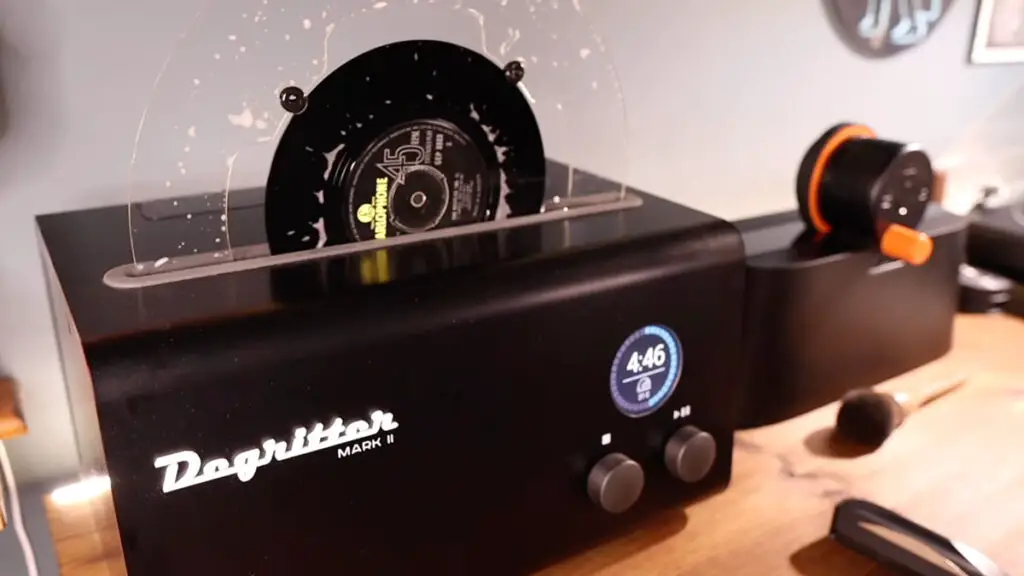
To test this, I ran the Beatles EP through my Degritter after cleaning it in the EZ. A HumminGuru NOVA could perform the same role; both use ultrasonic cavitation as the primary cleaning method, although their operation and price differ considerably. HumminGuru itself recommends using the EZ as a pre-wash before one of its ultrasonic machines.
The ultrasonic stage produced a further improvement, but I would say the EZ had already done the heavy lifting. The second clean felt more like the icing on the cake, perhaps extracting the final 10–20% available from that particular record.
Every record is different, of course. One disc might respond dramatically to a simple manual wash, while another requires several methods before the best possible result is achieved.
That is why I still find it useful to have a range of record-cleaning options available rather than relying on a single machine for every situation.
Drying the Records
HumminGuru recommends placing the cleaned record in the supplied rack and allowing it to air-dry.
The rack itself is excellent. It is stable, compact and can hold eight records without their surfaces touching.
I am slightly less enthusiastic about relying entirely on air drying, particularly when cleaning a large batch. Depending on room temperature and humidity, a wet record can easily take more than ten minutes to dry fully. There is also the possibility of airborne dust settling on the surface while it remains damp.
Personally, I would use a clean microfibre cloth to remove most of the remaining moisture before placing the record in the rack to finish drying. The important thing is to ensure the cloth is clean, lint-free and reserved solely for records.
Some collectors prefer not to touch the cleaned groove surface with a cloth, and that is understandable. In that case, the supplied rack provides a convenient hands-off solution—you simply need to allow sufficient time before returning the record to its sleeve.
The Black Basin
The EZ’s dark appearance suits the rest of HumminGuru’s product range and arguably looks more premium than the bright yellow Spin-Clean.
The colour does create one practical disadvantage though: it is difficult to judge how dirty the cleaning water has become.
One reason the Spin-Clean’s yellow basin works so well is that dirt and changes in water clarity are relatively easy to see. With the black EZ basin, you may need to inspect the fluid more carefully or judge when to replace it based on the number and condition of the records cleaned.
HumminGuru suggests that one tank can handle 10–20 records, while Spin-Clean has traditionally quoted higher figures of up to 50. I would not treat either number as a target you must reach.
If you are cleaning relatively clean new records, the solution may remain usable for longer. Put several filthy charity-shop finds through the same water and it should be changed much sooner.
When in doubt, empty the basin and freshen up that water; it will save you a lot of potential repeat cleaning!
HumminGuru EZ Record Washer vs Spin-Clean
The obvious question is whether the EZ is better than a Spin-Clean.
From a pure cleaning perspective, both systems are capable of removing dust, fingerprints and general surface contamination. I would need to test a much larger number of identical records under controlled conditions before claiming that goat hair cleans grooves more effectively than the Spin-Clean’s fabric pads.
From a usability perspective, however, the HumminGuru is the clear winner for me.
The one-handed rotation system is smoother and more comfortable. The clamp protects the label and eliminates adjustable rollers. The drying rack is integrated neatly into the design, and the lid, clamp and basin fit together intelligently for storage.
The EZ also feels less fiddly when switching between record sizes. There are no roller positions to remember or components to relocate inside the basin; you simply clamp the record and begin cleaning.
The Spin-Clean does have some advantages. Its bright basin makes the condition of the water easier to monitor, and its long history means replacement brushes, rollers, fluid and general support are widely established.
But HumminGuru deserves considerable credit for looking at a familiar product category and improving several of the everyday frustrations rather than simply producing another near-identical washing basin.
HumminGuru EZ Record Washer Pros and Cons
Pros
- Exceptionally smooth and easy one-handed rotation
- Secure clamp protects the record label
- No adjustable rollers required for different record sizes
- Supports 7-inch, 10-inch and 12-inch vinyl
- Soft, removable goat-hair brushes
- Effective at removing dust, fingerprints and surface grime
- Integrated drying rack holds up to eight records
- Compact, thoughtful storage design
- Useful as a pre-cleaner before ultrasonic washing
- Replaceable brushes and cleaning fluid available
Cons
- Black basin makes water clarity difficult to judge
- Air drying can take more than ten minutes
- More expensive than some basic manual cleaning methods
Sound Matters Verdict
The HumminGuru EZ Record Washer doesn’t reinventing what a record washer does, but I would certainly argue they’ve made much of the process more pleasant.
The Spin-Clean remains a proven and effective system, and I am not suggesting existing owners need to rush out and replace theirs. But the HumminGuru feels better thought out in several important areas.
The clamp and handle make records dramatically easier to turn, while the goat-hair brushes offer far less resistance than the tightly fitted velvet pads in my Spin-Clean. The absence of adjustable rollers also makes switching between LPs, EPs and singles considerably simpler.
I was impressed with the cleaning results. The EZ removed the light dust and fingerprints from the Sounds of the Countryside LP without difficulty, and it produced a meaningful improvement with the far more challenging Beatles EP.
The EZ removed enough contamination to give the record a noticeable new lease of life. Following it up with an ultrasonic clean extracted a little more, although the EZ had already done most of the heavy lifting.
The integrated drying rack and compact storage arrangement are excellent. My two reservations concern the black basin, which makes it difficult to monitor the cleaning water, and the reliance on relatively slow air drying. Though if air drying isn’t your thing, you can always manually dry your records safely with clean, lint-free microfiber clothes.
Neither issue is a deal-breaker.
For collectors looking for an affordable manual system to batch-clean records, the HumminGuru EZ is easy to recommend. It cleans effectively, takes up little space and is considerably nicer to operate than the Spin-Clean I have used for years.
It may not replace an ultrasonic or vacuum machine for the most demanding collectors, but it does not need to. As a standalone manual washer—or as the first stage in a more thorough two-step cleaning process—it is a genuinely useful and very well-designed product.
VIEW THE HUMMINGURU EZ RECORD WASHER
VIEW ON TURNTABLE LAB
