
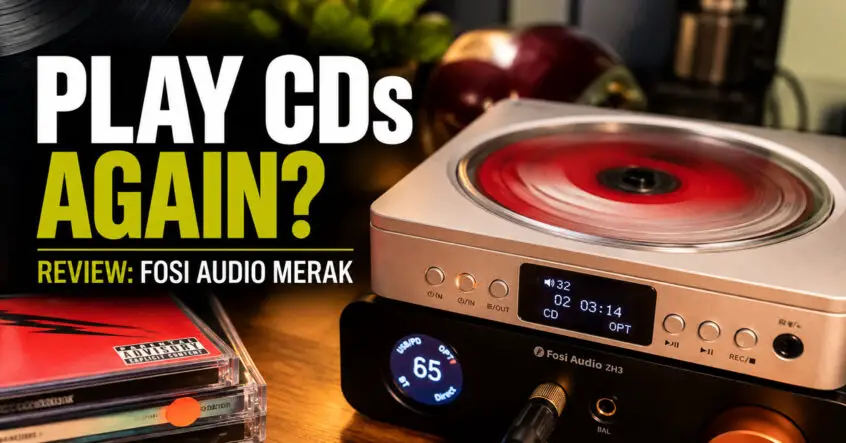
CDs are making a comeback, and this time around, there’s something rather interesting happening.
According to Luminate’s 2026 midyear report, CD sales in the US jumped by 16% during the first half of the year, reaching 16.3 million units. Granted, a lot of that growth is being driven by K-pop, but even with those sales removed, the format still managed an impressive 6.7% increase.
Perhaps more surprising is the suggestion that around half of Gen Z and Millennial CD buyers don’t actually own a CD player.
So, people are buying CDs again, whether that’s to collect physical music, support their favourite artists, or simply because CDs are often considerably cheaper than their vinyl counterparts. But not everyone has a dedicated way to play them.
And that’s where products like the Fosi Audio Merak CD Player start to look particularly interesting.
When I started buying select CDs again a few years ago, I invested in a compact little player from Pro-Ject called the CD Box S3. It’s a smart piece of kit, and I’ve thoroughly enjoyed using it in our living room, where space is at something of a premium.
But there’s a catch. The Pro-Ject isn’t exactly cheap, coming in at around £400 in Britain, with US pricing closer to $600.
By comparison, the Fosi Audio Merak costs just $139.99.
So, could this be the affordable CD player that the current physical music revival really needs?
I’ve been spending some time with the Merak to find out.
What Is the Fosi Audio Merak CD Player?
The Merak is a compact, standalone CD player with a built-in digital-to-analogue converter (DAC) and headphone amplifier. In other words, you don’t necessarily need lots of additional equipment to start enjoying your CD collection again.
Connect a pair of headphones, hook it up to some powered speakers, or feed the line output into an existing amplifier, and you’re up and running.
But Fosi hasn’t stopped there.
There’s also an optical digital output, meaning you can bypass the internal DAC altogether and use the Merak purely as a CD transport with an external DAC of your choice.
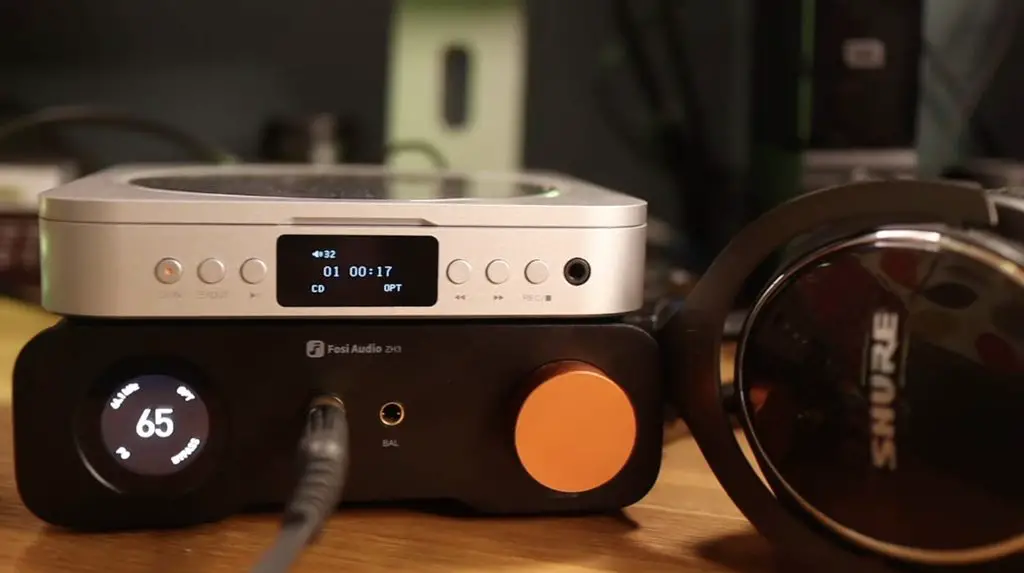
For my review, this is mostly how I used it, connecting the optical output to Fosi’s ZH3 DAC and headphone amplifier.
And I’ve got to say, as a desktop combination, I really like the pairing.
The Merak sits neatly on top of the ZH3, creating a compact little CD playback system that barely takes up any additional desk space.
That’s a big plus for me, given that my desk already has more than enough equipment competing for space.
You could absolutely use the Merak as part of a larger living-room hi-fi system, but personally, I think it feels most at home on a desk or as part of a compact audio setup.
And given Fosi’s reputation for making affordable, space-saving hi-fi equipment, that seems entirely appropriate.
Connectivity and features
Despite its modest dimensions, the Merak offers a surprisingly useful selection of connections and features.
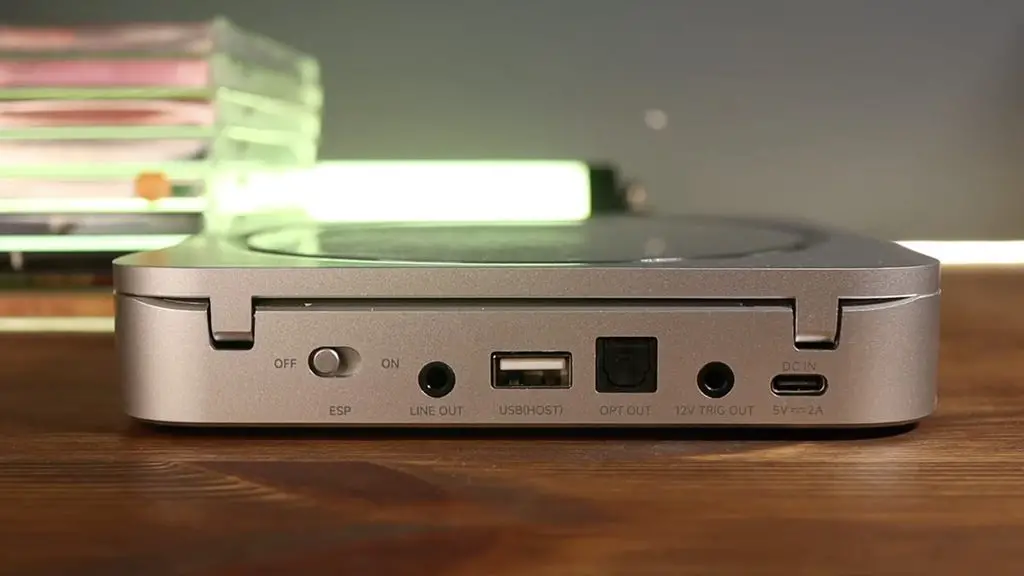
Around the back, you’ll find a line-level output for connecting to powered speakers or an amplifier, along with the optical digital output I mentioned earlier.
The optical connection is particularly welcome because it opens up plenty of possibilities for anyone who already owns a decent DAC.
There’s also a USB-A port that serves two purposes. Firstly, it allows you to play compatible digital audio files from a USB flash drive, including formats such as FLAC, WAV and MP3.
Secondly, and perhaps more interestingly, you can use it to rip your CDs directly to a USB drive without needing a computer.

I’ll come back to that feature shortly because I spent some time experimenting with it.
There’s also a 12V trigger output for synchronised power control with compatible equipment, plus a switch for the built-in Electronic Skip Protection (ESP).
ESP provides additional buffering to help prevent interruptions caused by movement or vibration. For my purposes, with the player sitting on a stable desk, I simply left it switched off.
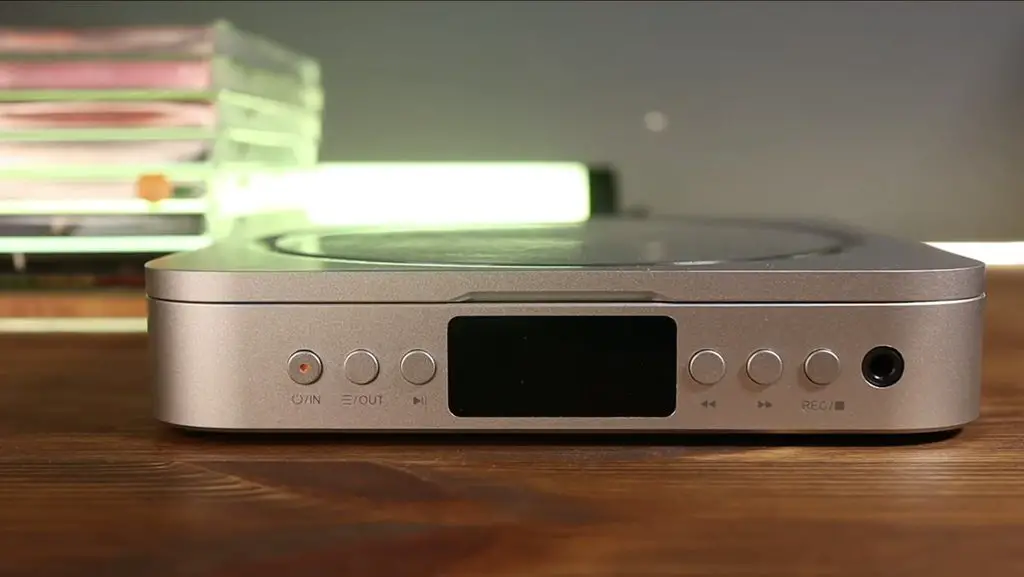
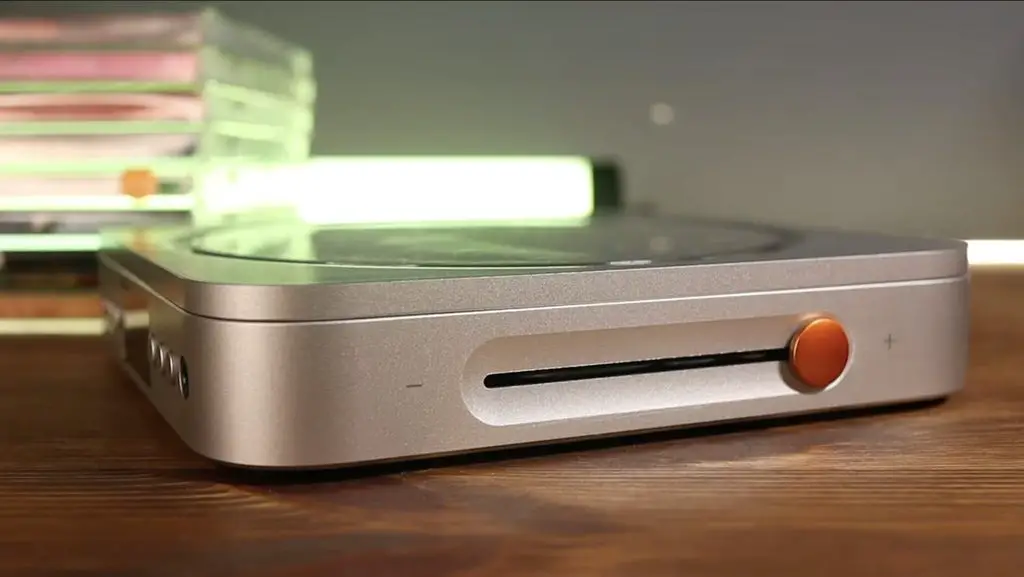
Around the front, you’ve got the headphone connection, playback controls and an LED display. There’s also a rather satisfying sliding volume control on the side for adjusting headphone listening levels.
Fosi includes a remote control, too, which is particularly useful if you’re planning to use the Merak in a conventional hi-fi system rather than having it sitting within arm’s reach on a desk.
One thing worth knowing before purchasing is that there’s no USB wall power adapter included.
You do get a USB-A to USB-C power cable, and I actually powered the player directly from my computer for much of this review. However, if you’re planning to connect it to a wall socket, you’ll need a suitable 5V/2A USB power supply.
It’s not a dealbreaker, but it’s something to factor into the overall cost.
Design and Build Quality: A Little Nostalgia Goes a Long Way
Considering the price, I think Fosi has done a very good job with the Merak’s physical design.
The aluminium construction feels reassuringly solid, and the silver finish gives it a clean, modern appearance.
I’m sure some people would prefer a black version to match the rest of their hi-fi equipment. Personally, though, I rather like the silver.
There’s something about it that reminds me of the old portable Sony Discman players from back in the day.
And that brings back some good memories.

Of course, unlike those portable players, the Merak doesn’t have a built-in rechargeable battery, so while it looks somewhat portable, it’s really designed to remain connected to a power source.
Which is absolutely fine by me.
As much as I’m enjoying the revival of physical music, I can’t particularly imagine myself going back to carrying a wallet full of CDs around whenever I leave the house.
I did enough of that the first time around!
That transparent lid is a nice touch
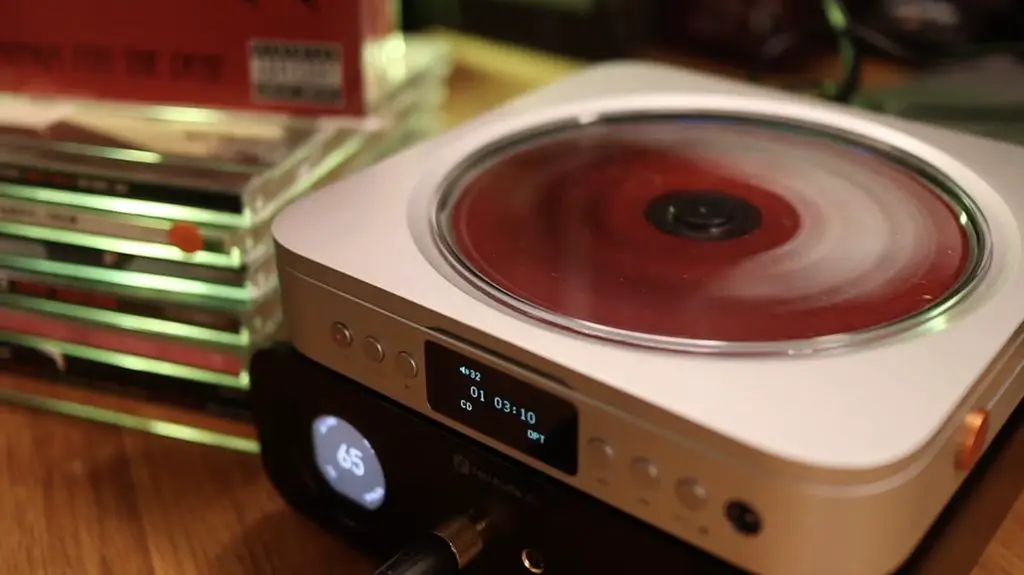
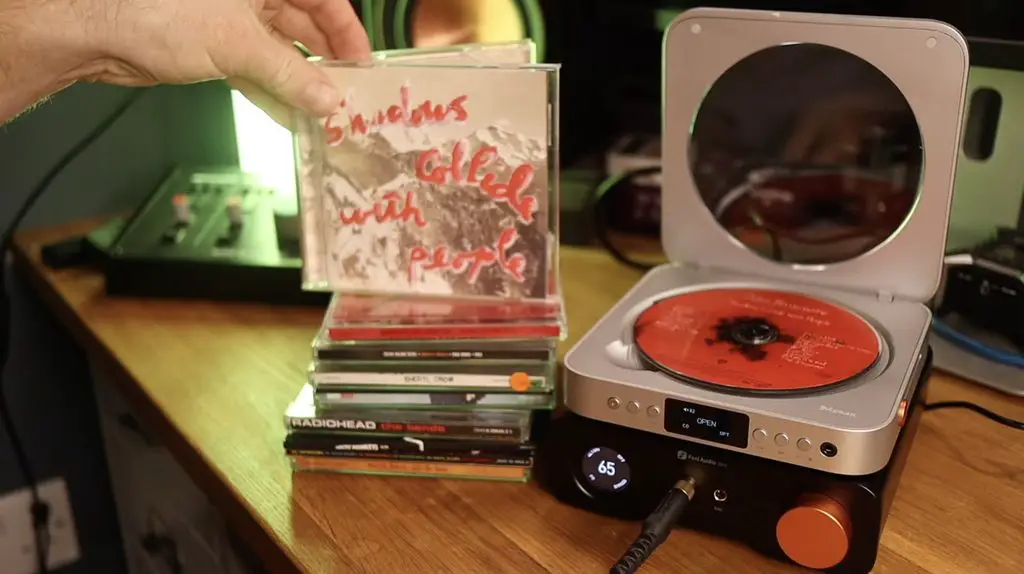
One of my favourite design features is the clear Perspex lid.
It’s a simple thing, but being able to watch the disc spinning underneath adds something to the experience of listening to a CD.
Back when CDs were the dominant format, I generally preferred conventional tray-loading players. These days, though, I find there’s something quite appealing about a top-loader where you can actually see the disc in action.
It brings a little of that visual experience back to physical music listening.
That’s something we talk about a lot with vinyl, but it’s easy to forget that CDs can offer an enjoyable physical experience, too.
The lid itself doesn’t have a soft-closing mechanism, so you need to be reasonably gentle when lowering it. However, the small rubber pads underneath help cushion the impact.
Overall, the Merak doesn’t feel as though it’s trying to compete with a luxury hi-fi component.
And nor should it.
It feels like a practical, well-made and thoughtfully designed player that’s intended to make CD listening accessible again.
At this price, that’s exactly what I’d want.
Living With the Fosi Merak: CD Playback and Sound Quality
One thing that caught my attention when reading the specification sheet was Fosi’s description of CD-R and CD-RW compatibility as partially readable.
Now, that’s not exactly the most reassuring thing to see when you’re reviewing a CD player.
As it happens, I’ve got a collection of old home-recorded CDs containing albums I wrote and recorded myself over the years.
So I decided to put the Merak to the test.
I tried five different albums, all recorded onto CD-R discs, and every single one played without any problems whatsoever.
No skipping, no difficulty reading the discs, and no playback issues that I encountered.
Obviously, that doesn’t guarantee compatibility with every recordable disc out there, and Fosi still recommends commercially pressed CDs for the best reliability.
But based on my experience, the Merak handled my collection of home-recorded discs extremely well.
It’s worth mentioning that the Merak doesn’t decode the high-resolution layer of SACDs, although it can play the standard CD layer of compatible hybrid SACDs.
Given the price, I wouldn’t consider that a particularly surprising limitation.
How does the Fosi Merak actually sound?
For most of my listening, I used a pair of Shure SRH1540 headphones, alongside my usual Klipsch speakers.
I tried the Merak in several configurations, including its built-in headphone output and analogue line connection, but I spent the most time using its optical output with the Fosi ZH3.
The first thing I’d say is that the Merak’s built-in headphone amplifier performed better than I might have expected for the money.
It had no trouble driving my Shure headphones to comfortable listening levels, and the overall presentation was enjoyable.
Switching to the ZH3, though, did bring some improvements.
Through the external DAC and headphone amplifier, I felt the sound was a little cleaner and more defined, with slightly better control and separation between instruments.
It wasn’t a night-and-day difference, but it was noticeable enough that I preferred the external setup.
That said, it’s important to keep the price in perspective.
If I were buying my first CD player today, perhaps as a younger listener getting into physical music, I would be perfectly happy starting with the Merak’s built-in audio outputs.
There’s plenty to enjoy here without immediately spending more money on additional equipment.
And that’s really the beauty of it. You can start with a straightforward, inexpensive setup and experiment with external DACs or other components further down the line.
For the money, I think the Merak offers a very respectable listening experience.
Rediscovering CDs — and an Interesting Japanese Bonus Track
One of the unexpected pleasures of reviewing the Merak has simply been spending more time listening to CDs again.
I’ve had quite a few enjoyable evenings rediscovering albums that I either haven’t played in years or have recently added to my collection.
One in particular was a Japanese edition of John Frusciante’s Shadows Collide with People.
It’s an album I’ve enjoyed for a long time, but the Japanese CD has something that the standard UK and US editions don’t: an additional song called Of Before.
It’s a great example of why I’ve always maintained that there are still good reasons to own physical music beyond the artwork and the simple pleasure of having something tangible in your collection.
Sometimes a particular physical edition contains music that wasn’t included on the standard release.
And that little discovery led me rather neatly into another feature of the Merak that I wanted to test.
CD Ripping: A Handy Feature With One Frustrating Limitation
The Merak has a built-in CD-ripping function, allowing you to transfer music from a CD directly onto a USB flash drive.
No computer required.
Now, this isn’t something I expect to use particularly often, but having been listening to that Japanese John Frusciante CD, it seemed like a good opportunity to experiment with the feature.
The process is surprisingly straightforward.
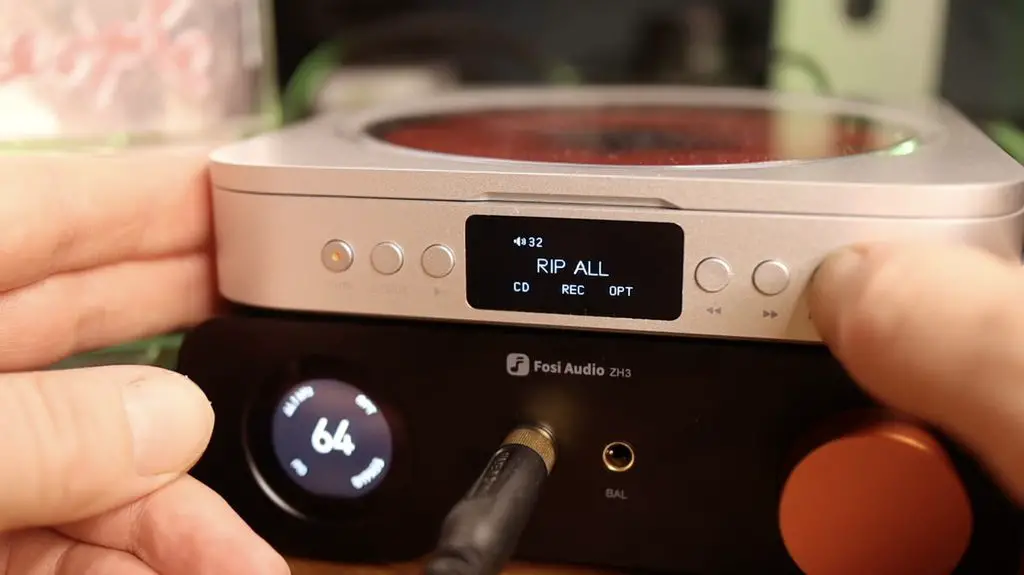
Insert a suitably formatted USB flash drive, load your CD, and hold down the REC button to begin recording.
The display shows a flashing recording indicator, letting you know the process is underway.
The Merak then saves the audio as WAV files on the USB drive.
Unlike ripping CDs on a computer, where a drive can often extract the audio considerably faster than real time, the Merak records as the disc plays.
So it’s not the fastest way of digitising an entire CD collection.
But it does work, and I experienced no problems with the process.
There is one annoyance, though.
The resulting files are simply named things like Track 1, Track 2, Track 3, and so on.
There’s no automatic album or artist information added to the files, which means you’ll have to organise and label them yourself if you want to maintain a properly structured digital music library.
That’s a shame, although perhaps understandable given how simple the implementation is.
Still, with so many modern computers no longer including optical disc drives, having the ability to rip a CD without purchasing a separate drive is genuinely useful.
For occasional use, it’s a nice bonus feature.
Fosi Audio Merak Review: Is It Worth Buying?
After spending time with the Merak, my overall impression is that Fosi has put together a very capable little CD player for the money.
It’s compact, well made, easy to use, and offers considerably more flexibility than you might expect from something costing just $139.99.
The fact that you can use it as a conventional CD player, a headphone listening station or a dedicated CD transport gives it plenty of versatility.
I particularly appreciate the optical output, which means you’re not locked into relying on the built-in DAC if you want to experiment with other equipment.
And while I did prefer the sound when using my external ZH3 DAC and headphone amplifier, the difference wasn’t so dramatic that I’d be unhappy listening through the Merak on its own.
The USB-ripping function is another welcome addition, even if the lack of automatically populated track information makes it less convenient than using dedicated computer software.
As for drawbacks, the absence of a wall power adapter is mildly irritating, the lid requires a little care when closing, and there’s no built-in battery for portable use.
But none of those things would put me off.
In terms of everyday playback, I encountered no significant bugs, troublesome disc-reading issues or other obvious operational problems during my testing.
That counts for quite a lot when you’re buying an affordable CD player.
Who should buy the Fosi Merak?
I think the Merak makes particular sense for anyone looking to get back into CDs without committing to a large or expensive hi-fi component.
If you’ve been collecting CDs again but haven’t got around to buying a player, this is an accessible place to start.
Equally, if you’ve already got a decent amplifier, some powered speakers or an external DAC and simply want to add CD playback to your system, the Merak is worth considering.
Personally, I’ve enjoyed using it as a desktop player alongside the ZH3, and I can quite easily see it becoming a permanent fixture on my desk while I’m working.
It would also make a lot of sense in a bedroom or small listening space, particularly if you’re trying to spend a little less time staring at screens.
There’s something rather appealing about putting on an album, putting your phone to one side, and simply enjoying the music.
And that’s ultimately where I think the Merak gets things right.
Final Verdict: Exactly the Sort of Product the CD Revival Needs
The really interesting thing about the Fosi Audio Merak isn’t just the hardware. It’s the timing.
CDs are enjoying renewed interest, younger listeners are rediscovering the format, and plenty of music fans are beginning to appreciate the value of owning albums again.
But if physical music is going to continue growing, we need affordable, accessible equipment that makes actually playing those formats enjoyable.
Not everybody has the space, budget or inclination to accommodate an expensive full-size CD player.
And that’s where the Merak makes so much sense.
It’s not pretending to be a high-end CD transport, and there are undoubtedly more sophisticated players available if you’re prepared to spend considerably more.
But as a straightforward way to bring CD playback back into a modern audio system, I think Fosi has struck a very good balance between performance, practicality and price.
And in a world where people are apparently buying CDs again — sometimes without even owning anything to play them on — the Merak feels like exactly the right product at exactly the right time.
